
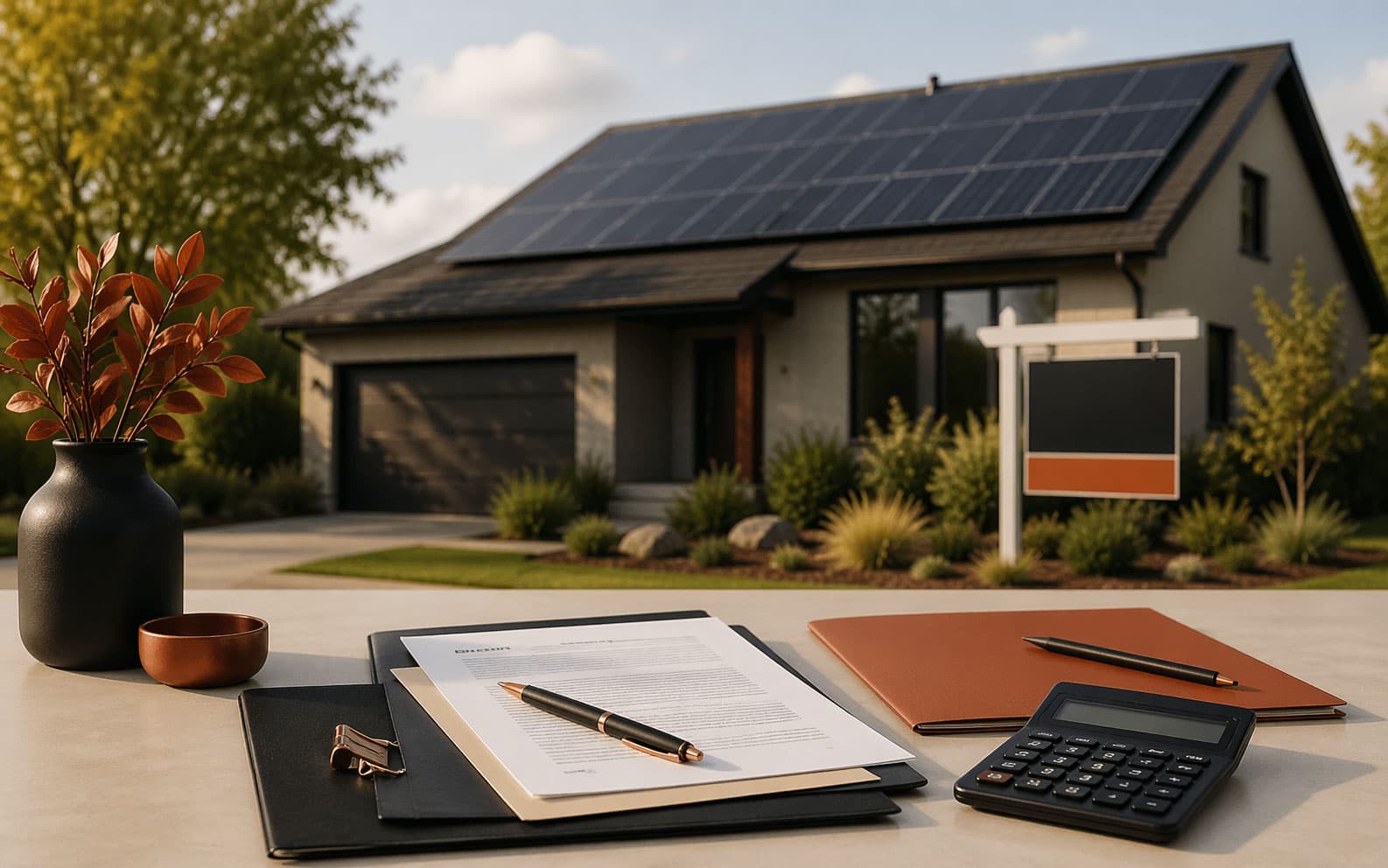
If you are having trouble selling a home because of solar panels, the problem is often not the panels themselves. The issue is usually the paperwork around them. Buyers, title companies, lenders, and real estate agents may all react differently depending on whether the system is owned, financed, leased, subject to a UCC filing, or still tied to unclear transfer or payoff requirements.
That is why some homes with solar sell without much trouble, while others run into delays, buyer hesitation, loan issues, or closing problems. The first step is to stop treating “solar panels” as the issue by themselves and start reviewing the exact agreement attached to the system.
Here is what to check first if solar panels are making your home sale harder.
Start With the Type of Solar Agreement You Have
Not all solar systems create the same home sale issues. Before assuming the buyer is simply nervous about solar, identify what type of agreement is attached to your system.
- An owned system paid in cash
- A financed system with a solar loan
- A solar lease
- A power purchase agreement, or PPA
- A financed system with a UCC-1 filing or related collateral language
- An agreement with unresolved service, warranty, or production concerns
This matters because a buyer may respond very differently to each structure. A fully owned system with clear documentation may feel simple. A lease, PPA, active solar loan, or unresolved filing can create more questions.
Home sale, refinance, title, lien, transfer, and mortgage questions can depend on the solar agreement, the filing language, the buyer, the lender, the title company, and the facts of the transaction. This article is general information, not legal, mortgage, or title advice. Review your documents and speak with qualified professionals when needed.

Common Reasons Solar Panels Can Complicate a Home Sale
When a sale gets stuck, the panels are often only part of the story. The real problem is usually one of the issues below.
1. The Buyer Does Not Want to Take Over the Solar Agreement
If the system is financed, leased, or under a PPA, the buyer may not want to assume the payment obligation, deal structure, or long-term contract. Some buyers want the home, but not the solar agreement that comes with it.
This does not automatically kill the sale, but it can force a new conversation around payoff, transfer, buyout, or price expectations.
2. The Solar Loan or Lease Creates Extra Approval Steps
A buyer may be willing to move forward, but the lender or solar company may require approval, credit checks, assumption paperwork, or transfer documents before the sale can close. That can slow everything down.
FTC consumer guidance warns that depending on the option you choose, you might need to take extra steps before selling your home.
3. A UCC-1 Filing or Solar Lien Raises Title Questions
Title companies and mortgage lenders may flag solar-related filings, especially if they are not clearly limited, explained, or resolved. Treasury’s guide specifically notes that solar liens often called UCC-1 liens can affect whether a prospective buyer wants to purchase the home, and in some cases the lender may require payoff or buyer assumption.
If that sounds familiar, the companion post on what a UCC-1 filing for solar panels means may help clarify the issue.
4. The Buyer Is Worried About Savings, Service, or Repairs
Some buyers are not worried about solar in theory. They are worried about inheriting unclear savings claims, service problems, roof issues, warranty limitations, or equipment they do not fully understand. If the system has underperformed or the installer is gone, the hesitation may grow.
5. The Numbers No Longer Look Attractive
If the monthly solar payment is high, if the utility bill is still significant, or if the total cost does not look favorable, the buyer may decide the system is not a benefit. This is especially true when the sale requires the buyer to assume a lease, PPA, or loan with terms that feel outdated or expensive.
If the cost side is part of the problem, the post on why a solar payment may have increased can help you review the terms more closely.

What Buyers, Lenders, and Title Companies Usually Want to Know
If a sale is being delayed, it helps to think like the people reviewing the transaction. Most of them are trying to answer a short list of practical questions.
- Who owns the solar system?
- Is there an active solar loan, lease, or PPA?
- Does the agreement need to be transferred?
- Can it be paid off before closing?
- Is there a UCC-1 filing or other security interest?
- Are there warranty or service issues?
- Is the system operating as expected?
- Will the buyer be taking on any future obligation?
When those answers are unclear, the sale can stall. That is why gathering documents early matters.
What Documents Should You Gather First?
If solar is becoming a sale problem, pull together the paperwork before assumptions harden into deal breakers.
- Your solar contract or installation agreement
- Your solar loan, lease, or PPA documents
- Any payoff statement or buyout quote
- Any transfer or assumption requirements
- Any UCC-1 filing or title notice tied to the system
- Warranty documents
- Production or monitoring records
- Utility bills if savings claims are part of the conversation
- Emails or sales materials that described the system and financing
If you already know there is a title or filing issue, the broader service page at /selling-your-home/ is the most direct fit for next-step review.
What If the Buyer Likes the Home but Not the Solar?
This is one of the most common situations. The buyer may still want the property, but not the payment structure, transfer process, or uncertainty that comes with the solar agreement.
In that case, the conversation often shifts to one or more of these questions:
- Can the solar loan be paid off before closing?
- Can the lease or PPA be transferred?
- Does the buyer qualify for the transfer?
- Would a price adjustment be needed?
- Can the solar company provide clear transfer instructions?
- Is there a filing that must be released, terminated, or clarified?
The answer may depend less on whether solar is “good” or “bad” and more on whether the paperwork can be made clean enough for the transaction to close.
When Solar Becomes a Home Sale Problem Instead of a Solar Problem
Sometimes the system itself works fine. The real problem is that the solar agreement does not fit smoothly into a normal home sale process. That can happen when:
- The buyer does not want to assume the solar obligation
- The title company raises concerns about a filing
- The lender wants payoff or subordination information
- The solar company is slow to respond
- The contract terms were not clearly explained when you signed
- The installer is out of business or hard to reach
- The transfer process is more restrictive than expected
If the solar company is no longer operating or is not responsive, the post on what happens if your solar company goes out of business may help you sort through the service and documentation side.

Does Trouble Selling Mean Solar Lowered the Home’s Value?
Not automatically. DOE notes that owned solar systems may increase home value in some situations, and some buyers are willing to pay more for a home with solar. :contentReference[oaicite:4]{index=4} But that does not mean every solar setup helps every sale.
A buyer may still hesitate if the agreement is financed, leased, difficult to transfer, tied to a filing, or surrounded by unclear service and savings claims. So the problem is often not value in the abstract. It is transaction friction.
That is why broad statements like “solar always helps resale” or “solar always ruins a sale” are both too simplistic.
What Not to Do
Do not assume every buyer objection means the deal is dead. Do not assume every solar agreement can be transferred easily. Do not wait until the final week before closing to request payoff, transfer, or filing documents. And do not rely only on what the salesperson originally told you if the written contract says something more limited.
If the problem overlaps with collateral language or filing issues, the post on solar UCC-1 filings is one of the best next reads.
Start With a Solar Sale Review
If solar panels are making it harder to sell your home, DitchYourSolar can help you take the first step. Review the agreement, transfer terms, payoff requirements, and any filing or title issues so you can better understand what may be worth addressing before the sale moves forward.
Review Your Solar Home Sale Issues
Many solar sale problems are really paperwork, payoff, transfer, or title problems. The faster you identify which one you are dealing with, the easier it is to understand the next step.