

If you are asking, “Can I cancel my solar contract?” you are probably already frustrated. Maybe the payment is higher than expected. Maybe the savings never showed up. Maybe you are trying to sell your home and the solar agreement is suddenly making everything harder.
The honest answer is: sometimes, but it depends. Solar contract cancellation is not one-size-fits-all. Your options may depend on the type of agreement you signed, how long ago you signed it, whether the system has been installed, what was promised during the sale, and what the paperwork actually says.
This guide walks through what homeowners should review first before assuming they are stuck, stopping payments, or trying to cancel a solar contract without a plan.

Start With the Type of Solar Agreement You Signed
The first thing to understand is what kind of solar agreement you have. Many homeowners use the word “contract” broadly, but the details matter. A solar loan, lease, and power purchase agreement can create very different obligations.
- Solar loan: You borrowed money to pay for the system, and you may still owe the lender even if the installer is unresponsive or the system is underperforming.
- Solar lease: You usually do not own the system outright. You make payments to use it, and the agreement may include transfer, buyout, or cancellation language.
- Power purchase agreement: Also called a PPA, this usually means you pay for the power the system produces, often with rate or escalation terms built in.
- Cash purchase: You paid for the system directly, but there may still be warranty, production, service, or installation issues to review.
If you are not sure what type of agreement you have, that is normal. Many homeowners only realize the difference after they begin reviewing the documents. If you need a broader breakdown, start with our How It Works page.
Review What the Contract Actually Says
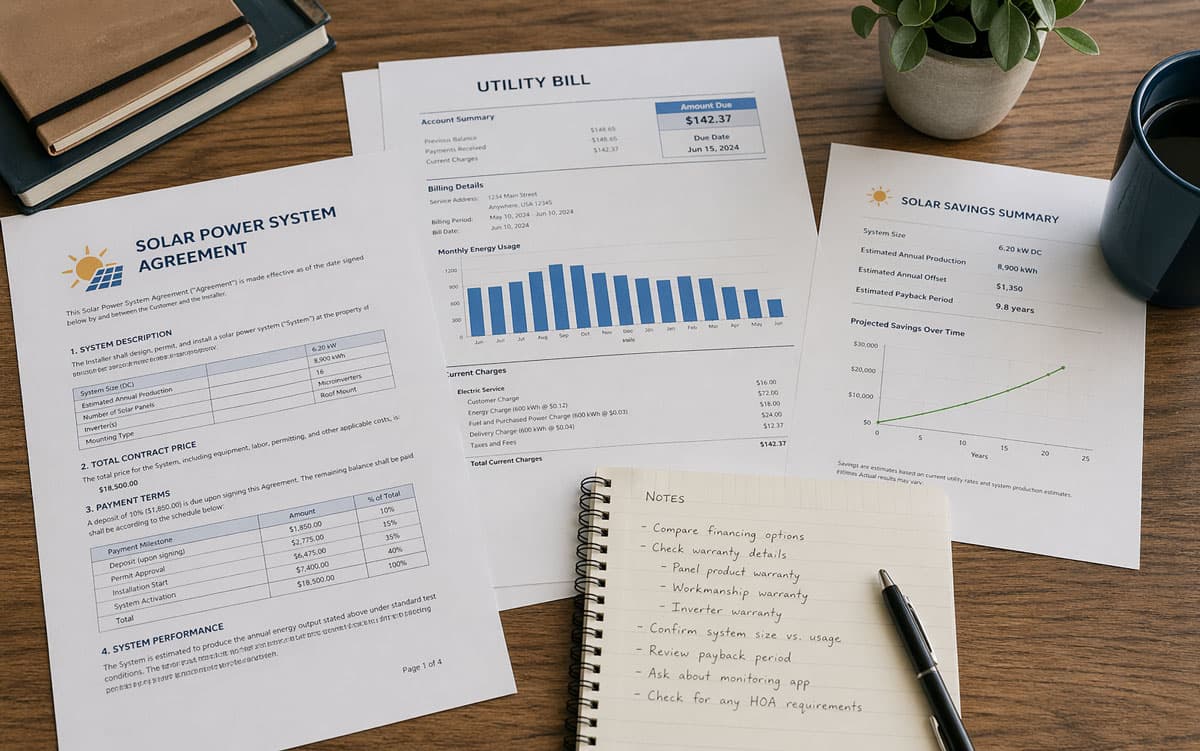
Before trying to cancel a solar contract, review the actual agreement. The sales conversation matters, but the signed paperwork usually controls the formal obligations. That does not mean sales promises are irrelevant. It means you need to compare what you were told with what you signed.
Look for sections covering:
- Cancellation rights or rescission periods
- Termination fees or early payoff language
- Payment increases or escalator clauses
- Transfer requirements if you sell your home
- Production, savings, or performance claims
- Warranty and service responsibilities
- Tax credit assumptions
- Dispute resolution or arbitration language
This is where a lot of homeowners discover the real issue. The contract may not match what they thought they were buying. If the agreement feels unfair, confusing, or misleading, review our bad solar contract review page.
Common Reasons Homeowners Want to Cancel a Solar Contract
Most homeowners do not wake up one day randomly wanting out. Something usually changed, or something they were promised never happened.
Common reasons include:
- The monthly solar payment is higher than expected
- The utility bill did not drop the way the sales rep promised
- The system is not producing what was represented
- The homeowner was promised a tax credit they did not receive or could not use
- The contract is making it harder to sell or refinance the home
- The solar company, lender, or installer is no longer responding
- The homeowner found a lien, UCC filing, or transfer issue during a home sale
- The homeowner feels misled by the original sales pitch
Some of these issues may point to payment pressure. Others may point to contract terms, sales representations, service problems, or home sale complications. That is why the first step is usually review, not panic.
Does Canceling a Solar Contract Hurt Your Credit?
It can, depending on the situation. If your agreement includes a solar loan and you stop paying without a plan, missed payments may create credit risk. If an account is sent to collections, disputed, settled, transferred, or handled through a lender, the credit impact can vary.
This is one reason homeowners should be careful about simply refusing to pay. Even if you believe the contract is unfair, your next step should be based on the agreement, the loan structure, and the facts around the sale.
If your biggest issue is the loan payment, visit our payment issues page or use the solar contract calculator to estimate long-term payment pressure.
What If the Sales Rep Misled You?
Misleading sales claims are one of the biggest reasons homeowners start asking whether they can cancel a solar contract. The problem is that spoken promises can be harder to prove unless you have documentation.
Useful evidence may include:
- Texts or emails from the sales rep
- Sales proposals or savings estimates
- Tax credit claims or payment projections
- Marketing materials
- Photos of handwritten notes or calculations
- Utility bills before and after installation
- System production records
- Any messages about cancellation, transfer, or payoff
If you have the contract and supporting documents, you can upload them through our contract upload page.
What If You Are Past the Cancellation Window?
Many solar contracts include a short cancellation or rescission period. If that window has passed, cancellation may become harder, but that does not always mean there is nothing to review.
Other issues may still matter, including:
- Whether the agreement was presented clearly
- Whether financing terms were explained accurately
- Whether installation or service obligations were met
- Whether home transfer requirements were disclosed
- Whether the contract includes terms that deserve closer review
The key is not to assume. A homeowner trying to get out of a solar contract should first understand what the paperwork says and how the facts line up with the original sales process.
What Should You Do Before Trying to Cancel?
Before taking action, gather the documents and details that explain your situation. This makes it easier to understand what options may exist.
- Your solar contract
- Loan, lease, or PPA documents
- Recent solar and utility bills
- Tax credit paperwork or sales claims
- System production records, if available
- Emails, texts, or written promises from the sales process
- Home sale, refinance, lien, or UCC documents if relevant
- Any notes about what changed after signing
Once you have those materials, the next step is to review the contract and identify the main pressure point. Is this a payment issue? A misleading sales issue? A transfer issue? A performance issue? Or a broader cancellation question?
Important: DitchYourSolar is not a law firm and does not provide legal advice. The information on this page is for general educational purposes only. Your options may depend on your contract terms, timing, documents, and specific facts.
So, Can You Really Cancel a Solar Contract?
Sometimes, but the answer depends on the agreement and the facts. Some homeowners may have clear cancellation language. Others may need to review financing terms, transfer problems, misleading sales claims, or performance issues before they understand the realistic path forward.
The biggest mistake is assuming you are completely stuck without reviewing the paperwork. The second biggest mistake is taking action without understanding how the contract, loan, lease, or PPA works.
If your solar agreement no longer feels right, start by getting clarity.
Start With a Free Review
If you are asking whether you can cancel your solar contract, DitchYourSolar can help you take the first step. Submit your information, upload your documents if available, and we will help you better understand what may be worth reviewing next.